

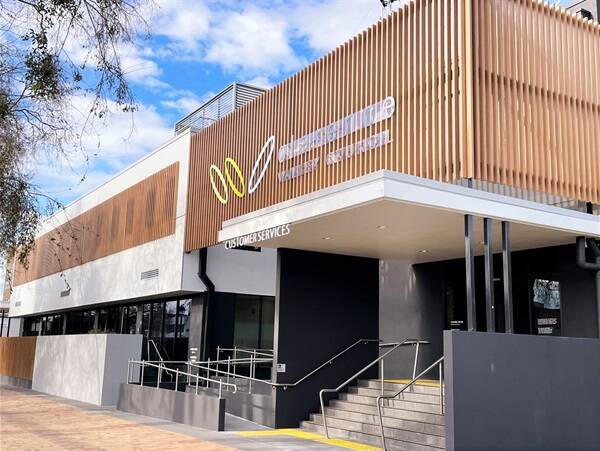
Division within Clarence Valley Council has again been thrust into the public spotlight following Monday’s extraordinary meeting, which descended into confusion and controversy just minutes after it began.
The meeting, held on November 3, centred on a Mayoral Minute brought forward by Mayor Ray Smith in response to statements made by Greens MP Dr Amanda Cohn in the NSW Parliament on October 23.
Mayor Smith’s Mayoral Minute dismissed those claims as unsubstantiated. The Mayor sought support to lodge a formal complaint with the NSW Parliamentary Ethics Committee, alleging Dr Cohn had misused parliamentary privilege and failed to verify her information before speaking publicly.
He also raised his annoyance that Dr Cohn had not contacted him beforehand about the concerns, noting that under the Local Government Act the Mayor is the official spokesperson for council.
However, proceedings quickly turned chaotic before he was even able to start. The meeting went into recess just six minutes after it began following disruptions from the public gallery. Police were called for assistance after repeated attempts by two community members to address the meeting. The recess lasted several minutes before Councillors returned to the chamber.
When the meeting resumed, Councillor Clancy questioned the lawfulness of the meeting causing a brief back and forth with the Mayor. Mayor Smith stated that there was nothing in the Code of Meeting Practice prohibiting him from calling the meeting, saying, “I’ve done it. If you don’t wish to remain, you may go. However, I would encourage Councillors to continue with this meeting so that we can get through the business.”
Councillor Lynne Cairns responded sharply, saying, “This meeting is ridiculous. In my opinion, there is a lack of transparency and accountability and Mr Mayor, you yourself, where are the actual unsubstantiated allegations of Council misconduct you are referring to? and where in the Local Government Act does it actually say that a councillor cannot have any discussion with an elected member of State Parliament? You yourself have actually said when you were General Manager that you provided your contract freely to councillors.”
Councillor Clancy then attempted to speak further on the matter, but the Mayor did not accept his request to continue. Clancy responded with "Are you gagging me because I have something valid to say to explain. Your response was that there is nothing in the code of meeting practice that prohibits you from unilaterally calling this meeting. Well, there is. It's under section 3.5. But we work under civil law, not common law. Under common law, you'd be right. Everything that is not prohibited is allowed. But under civil law, that is not the case. So this meeting is not constitutional."
At that point, Councillor Peter Johnstone interjected, asking whether Councillor Clancy would prefer that councillors all leave and come back in three days once two signatures had been obtained, which he said they surely would.
Following the exchange, both Councillor Clancy and Councillor Cairns left the meeting but remained in the chamber for a period of time, citing concerns that the meeting was unconstitutional and lacked proper process.
Councillor Clancy later told CVCI that the Mayoral Minute was circulated to Councillors on the morning of the meeting, with some not seeing it until minutes beforehand due to travel. He said it was inappropriate for councillors to be asked to vote without enough time to review it, describing the process as lacking transparency and good governance.
After their departure, Councillor Cristie Yagar moved an amendment motion seeking to modify the original Mayoral Minute. Her amendment proposed that the Council reaffirm that it is the role of the elected governing body to hold to account the role and the performance of the General Manager, consistent with the Local Government Act 1993 and the principles of good governance.
The amendment was debated briefly before being put to a vote, which passed.
Following the passing of the amendment, Mayor Smith called for Councillors to reaffirm their full confidence in General Manager Laura Black, praising her for what he described as strong organisational leadership and a record of major project delivery. The motion was then carried by the remaining Councillors, giving the Mayor authority to send a formal complaint to the NSW Parliamentary Ethics Committee and confirming council’s support for the General Manager.
In a statement to CVCI following the meeting which has now been made public, Councillor Johnstone said Clarence Valley Councillors in the chamber stood united in unanimously condemning what he described as unwarranted interference by Dr Amanda Cohn, an act viewed as a direct attempt to undermine local democracy.
He said Clarence Valley councillors were elected just one year ago with a clear mandate to improve the region and deliver practical outcomes for the community. He added that it was time to refocus on the priorities that matter, including roads, rates, rubbish, water, disaster preparedness, environmental stewardship, and parks.
In recent interviews and council meetings, several Councillors, including the Mayor himself, have downplayed the level of public discontent, claiming that only a small number of residents are unhappy with council. Councillor Johnstone went as far as to suggest the number was about eight people.
The online response has been overwhelmingly critical, with residents describing the Council as out of touch, defensive, and unaccountable. Hashtags such as #NotMyMayor and #SackBlack have gained traction among locals, reflecting the growing anger and loss of trust in council leadership.
That claim has been met with disbelief by many in the community. A poll currently running on the Clarence Valley Community Information Facebook page has received more than 1,100 votes, with 96 per cent of respondents saying they do not believe the Council is acting in the best interests of the community. The comments section is filled with residents voicing frustration and criticism of the council.
The controversy follows several months of rising tension between the Council and the public, including criticism over the organisation’s participation in the Jacaranda Festival festival, which some viewed as mocking community concerns.
As frustration continues to grow, many residents are calling for greater transparency, accountability, and, in some cases, de-amalgamation, arguing that the 2004 merger that created Clarence Valley Council has left smaller towns without a genuine voice, and significantly impacted the Maclean area, the only amalgamated Council of the 5 that had substantial funds in the bank and well working systems.
As one resident told CVCI, people are not angry for the sake of it, they are angry because they care. They just want a council that listens, takes responsibility, and respects the people it serves.
With police called for assistance, Councillors walking out, an amendment passed, and the final motion carried, the extraordinary meeting has only deepened the divide between Clarence Valley Council and the people it represents.
Since the meeting, it has come to light through CVCI’s own research, and was later confirmed by Dr Cohn in an interview with NBN, that neither the council nor individual councillors have the power to refer a member of State Parliament to the NSW Parliamentary Ethics Committee that the Council acts upon civil law not common law.
Add comment
Comments
Council has to be dismissed and have a a new take over